
Generator Won’t Start? Step-by-Step Troubleshooting Guide

The storm hits. The power goes out. You walk outside to your generator, press the start button, and… nothing. No crank. No sputter. No reassuring roar. Just silence—or maybe a weak click that fades into nothing. When your generator wont start, panic sets in fast. But in 90% of cases, the problem is one of five things: a dead battery, stale fuel, a fouled spark plug, a triggered safety switch, or a simple control board error.
This guide is built for that exact moment. We will walk you through a logical, step-by-step troubleshooting flow that takes you from “completely dead” to “running smoothly” without guessing. Each section tells you what to check, how to check it, and what part you need to fix it. Keep this bookmarked. When your generator won’t start at 2 AM, you will be glad you did.

Before You Start: Safety First
Before you touch anything inside your generator, follow these safety rules. They are not suggestions—they prevent injury and avoid turning a simple fix into an expensive mistake.
- Disconnect the battery negative terminal before working on fuel or electrical components.
- Let the engine cool completely if it has been running recently. Exhaust components stay hot for 30+ minutes.
- Work in a ventilated area. Gasoline vapors are explosive. Do not troubleshoot fuel issues in a closed garage with pilot lights.
- Have a fire extinguisher rated for Class B fires within reach when handling fuel.
- Wear safety glasses when using compressed air or carburetor cleaner.
Step 1: Check the Battery
The battery is the number one reason a generator wont start—especially on standby units that sit idle for months. A lead-acid battery loses charge over time, and cold weather accelerates that drain. If your generator clicks but does not crank, or if the control panel is completely dark, start here.
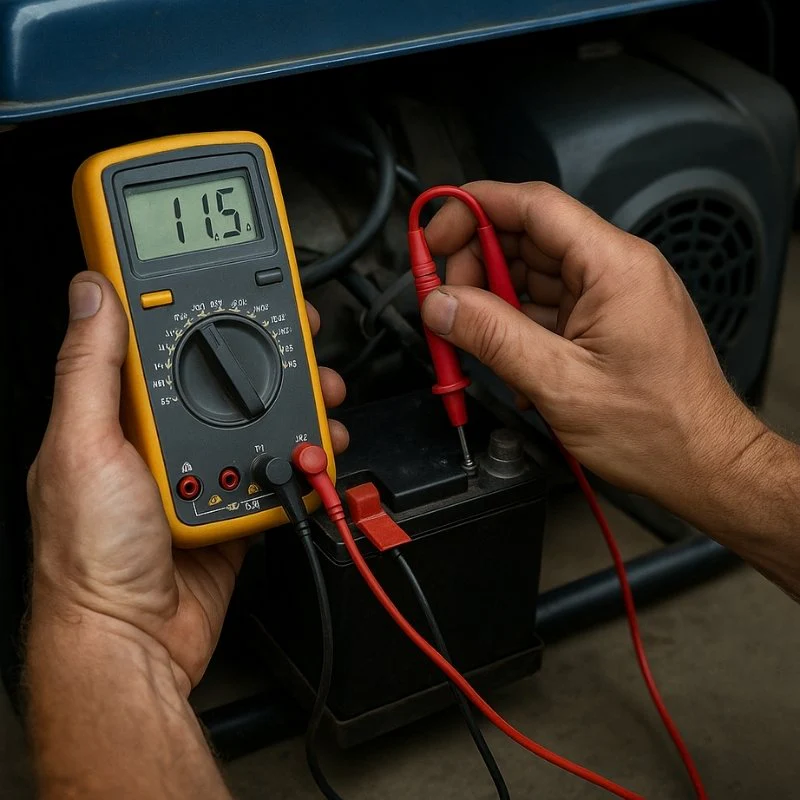
How to Test the Battery
You do not need to be an electrician. A basic multimeter is enough.
- Set your multimeter to DC voltage.
- Touch the red probe to the positive battery terminal and the black probe to the negative terminal.
- Read the voltage.
| Voltage Reading | Battery Condition | Action |
|---|---|---|
| 12.6V or higher | Fully charged | Battery is good. Move to Step 2. |
| 12.0V – 12.5V | Partially discharged | Charge with a trickle charger for 4–6 hours, then retest. |
| Below 12.0V | Dead or failing | Replace the battery. Most standby generators use a Group 26R or similar 12V battery. |
Also Check the Battery Connections
Even a good battery fails if the terminals are loose or corroded. Look for:
- White or green crust on the terminals (corrosion)
- Loose cable clamps that wiggle by hand
- Frayed or cracked battery cables
Clean corrosion with a wire brush and a baking soda paste. Tighten clamps until they do not move. If cables are damaged, replace them.
Step 2: Check Fuel Supply and Quality
If the battery is good but the engine cranks without firing, fuel is the next suspect. Generators are sensitive to fuel quality. Gasoline begins to degrade in as little as 30 days. After 3–6 months, it turns into varnish that clogs carburetor jets and fuel lines.
Quick Fuel Checks
- Verify the fuel valve is open. On portable generators, the fuel shutoff valve must be in the “ON” or “I” position. It is easy to bump it to “OFF” during storage.
- Check the fuel level. On propane units, verify the tank is not empty. On natural gas units, confirm the utility gas valve is open and the line has pressure.
- Smell the fuel. Fresh gasoline smells sharp. Stale fuel smells sour or like varnish. If the gas is older than 3 months, drain it.
- Look at the fuel. Pour a small sample into a clear jar. Good gas is clear or light amber. Dark, cloudy, or separated fuel is bad.
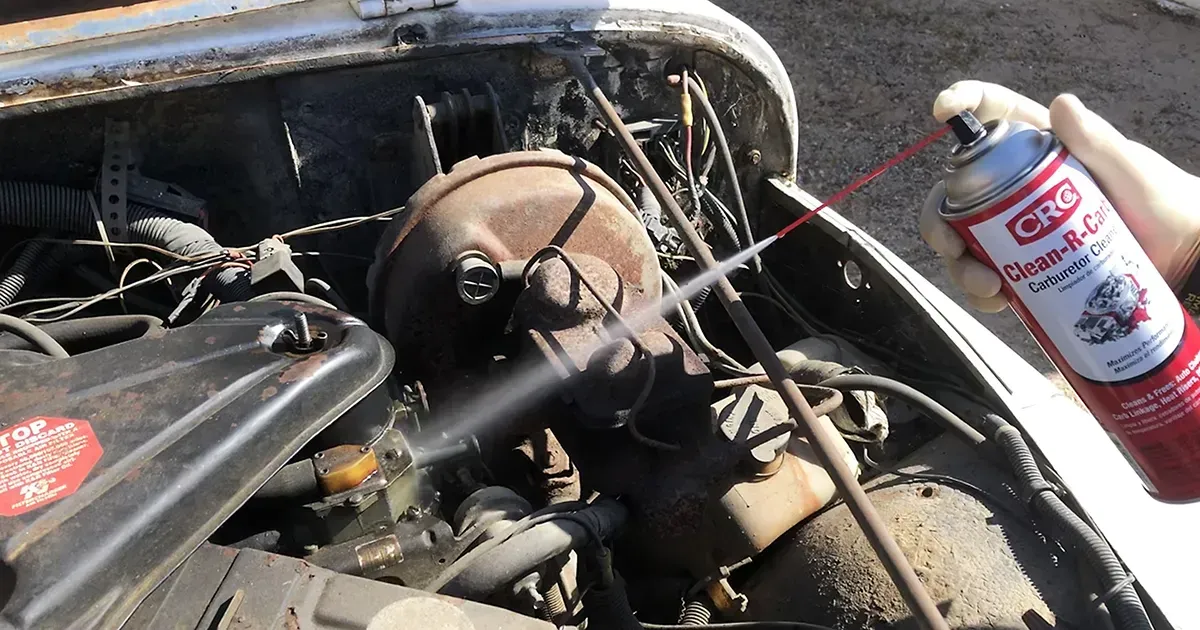
How to Clean a Clogged Carburetor
If your generator has been sitting with old gas, the carburetor is likely gummed up. Here is the fastest way to clean it without a full rebuild:
- Shut off the fuel valve and drain the carburetor bowl using the drain screw at the bottom.
- Remove the carburetor bowl and inspect for varnish or sediment.
- Spray carburetor cleaner into the main jet, pilot jet, and emulsion tube. Use the red straw that comes with the can.
- Let it sit for 10 minutes, then spray again.
- Reassemble and fill with fresh fuel treated with stabilizer.
Prevention: Always add fuel stabilizer like Sta-Bil or Sea Foam to your gas tank before storage. Run the generator for 5 minutes to circulate the stabilizer through the carburetor. This single step prevents 80% of fuel-related no-starts.
Step 3: Inspect the Spark Plug
The spark plug ignites the fuel-air mixture. If it is fouled with carbon, soaked in oil, or worn out, the engine will crank forever without firing. Spark plugs are cheap and easy to check, so never skip this step.
How to Inspect a Spark Plug
- Remove the spark plug wire by pulling the boot, not the wire itself.
- Use a spark plug socket to unscrew the plug.
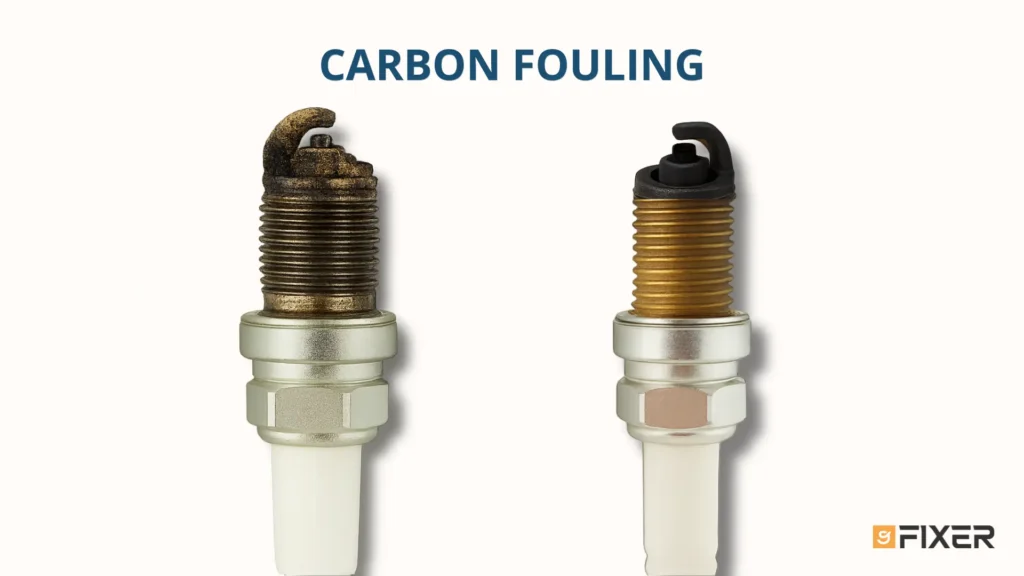
- Look at the electrode tip.
| Plug Condition | What It Means | Fix |
|---|---|---|
| Light tan or gray | Normal combustion | Reinstall and move to next step. |
| Black and dry (sooty) | Carbon fouling—rich fuel mixture or clogged air filter | Clean with a wire brush or replace. Check air filter. |
| Black and wet (oily) | Oil fouling—oil leaking into combustion chamber | Replace plug. If it fouls again, engine needs professional service. |
| Worn electrode (rounded gap) | Normal wear after 100+ hours | Replace with OEM-spec plug (usually RC12YC for Generac). |
Test for Spark
If the plug looks clean but the engine still won’t start, verify it is actually producing a spark:
- Remove the spark plug and reconnect the wire boot.
- Hold the plug’s metal threads against a clean metal surface on the engine block.
- Crank the engine and watch the electrode gap.
- You should see a bright blue spark. A weak yellow spark or no spark means the ignition coil or magneto may be failing.
At Universal Generator Parts, we stock pre-gapped spark plugs for Generac, Briggs & Stratton, Kohler, and Honda engines. Always use the plug specified in your owner’s manual—the wrong heat range causes pre-ignition or fouling.
Step 4: Check Oil Level and Safety Switches
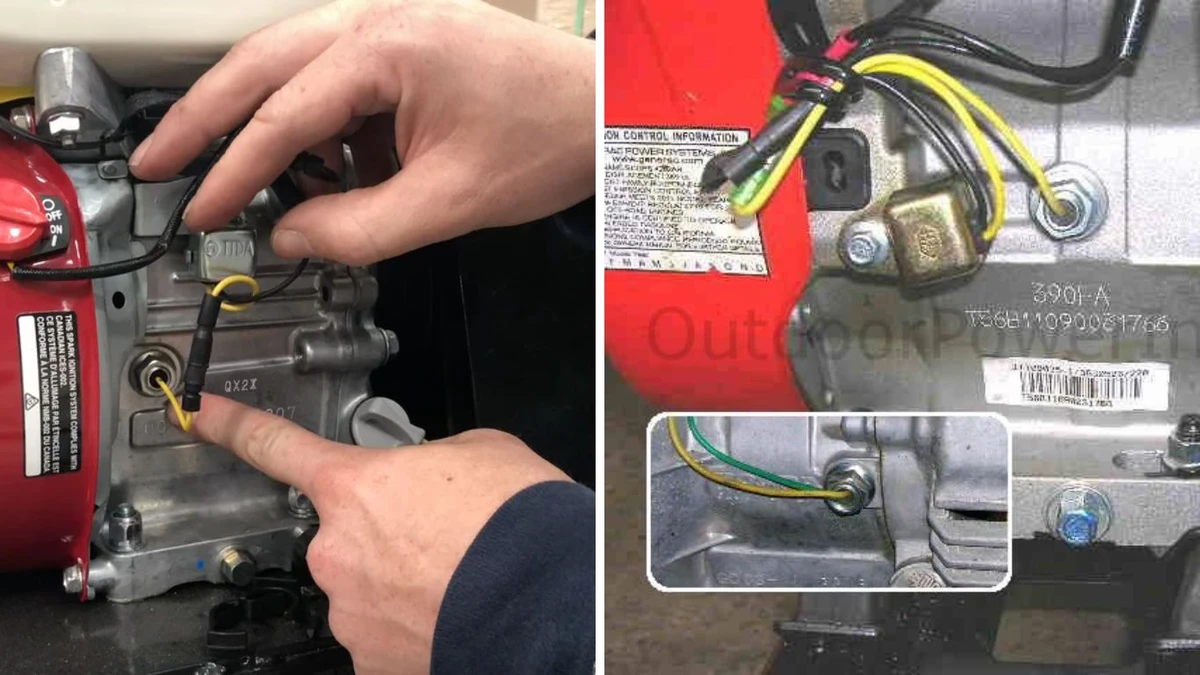
Modern generators are designed to protect themselves. If the oil level drops too low, a safety switch shuts down the ignition system to prevent engine damage. This is called low oil shutdown, and it is one of the most common reasons a generator wont start—especially after the first oil change when owners accidentally underfill.
How to Check and Fix
- Place the generator on level ground. An angled surface gives a false dipstick reading.
- Remove the dipstick, wipe it clean, reinsert fully, then remove again.
- The oil should be between the “ADD” and “FULL” marks. If it is at or below “ADD,” the low oil switch is likely triggered.
- Add the correct oil type (usually SAE 5W-30 or 10W-30) until the dipstick reads “FULL.”
- Try starting again. If it starts, the low oil switch was the culprit.
Other Safety Switches to Check
- Circuit breaker: Make sure the main breaker on the generator is in the “ON” position, not tripped.
- E-stop switch: Some standby units have an emergency stop switch. If it was bumped during maintenance, the generator will not start. Reset it to “RUN.”
- Overload reset: If the generator shut down under heavy load, press the overload reset button before restarting.
Step 5: Inspect the Air Filter
A clogged air filter chokes the engine. Without enough airflow, the fuel mixture becomes too rich, causing hard starts, black smoke, and carbon fouled spark plugs. This is an easy 30-second check that many owners skip.
- Remove the air filter cover (usually held by clips or one screw).
- Pull out the filter element.
- Hold it up to a light. If you cannot see light through it, it is clogged.
Foam filters: Wash in warm soapy water, squeeze dry, then re-oil lightly with clean engine oil.
Paper filters: Tap gently to remove loose dirt. If heavily clogged, replace it. Paper filters cannot be washed.
We stock replacement air filters for every major generator brand. A new filter costs less than $15 and can be the difference between a reliable start and a no-start situation.
Step 6: Read the Control Panel Error Codes
If you have a standby generator with a digital controller, the display may be telling you exactly why the unit won’t start. Generac Evolution controllers show numeric error codes that point directly to the failure.
Common Generac Error Codes
| Error Code | Meaning | Likely Fix |
|---|---|---|
| 1100 / Overcrank | Engine cranked but failed to start | Check fuel supply, spark plug, and battery. Clear code and retry. |
| 1300 / Low Battery | Battery voltage below threshold | Charge or replace battery. Check trickle charger. |
| 1505 / RPM Loss | Engine started but did not reach full RPM | Weak battery, bad starter relay, or fuel starvation. |
| 1902 / Low Oil Pressure | Oil pressure dropped below safe limit | Check oil level. If full, sensor may be faulty. Do not keep starting. |
| 2800 / Aux Shutdown | Emergency stop switch triggered | Check both E-stop switches and reset to ON position. |
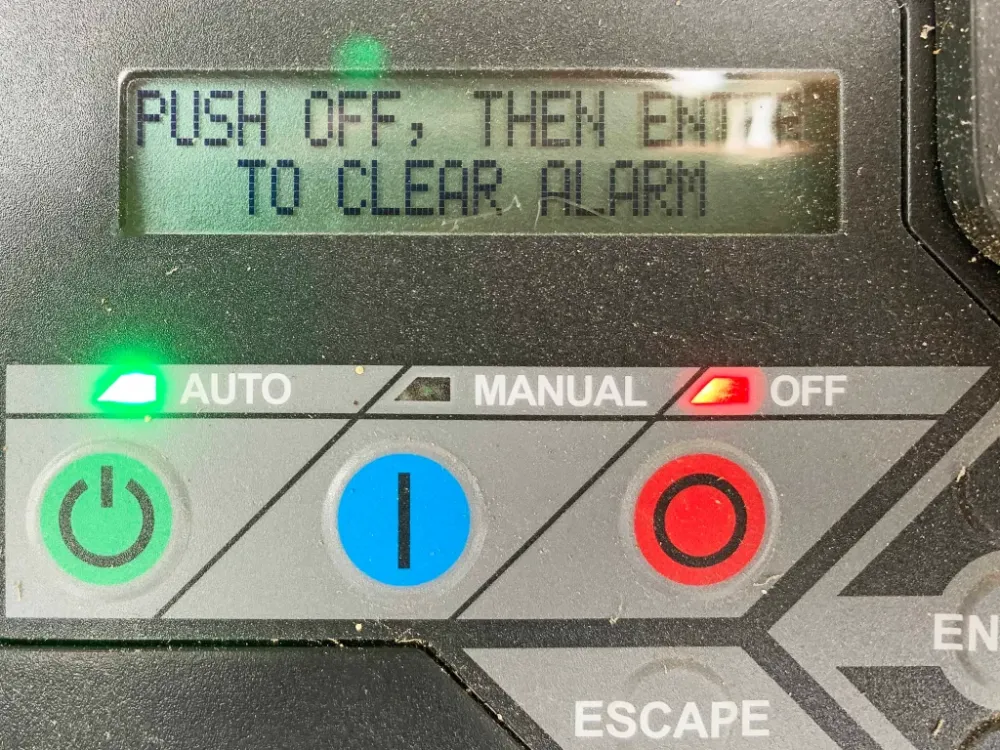
How to Clear an Error Code
On most Generac controllers:
- Press the OFF button on the control panel.
- Press ENTER to acknowledge the alarm.
- Press ENTER again to clear the code.
- Press AUTO to return the unit to automatic mode.
If the code returns immediately after clearing, the underlying problem still exists. Do not keep resetting it—fix the root cause first.
Quick Reference: Generator No-Start Flowchart
Use this flowchart when your generator wont start. Start at the top and work down.
| Symptom | Check This First | Part You May Need |
|---|---|---|
| No lights, no click, completely dead | Battery voltage and connections | Battery, battery cables |
| Clicks but won’t crank | Battery charge, starter relay | Battery, starter solenoid |
| Cranks but won’t fire | Fuel quality, spark plug, air filter | Spark plug, air filter, carburetor |
| Fires briefly then dies | Stale fuel, clogged carburetor jet | Carburetor, fuel filter, fresh gas |
| Red light + error code on display | Controller error code meaning | Control board, sensors |
| Runs rough, black smoke | Clogged air filter, fouled plug | Air filter, spark plug |
Frequently Asked Questions
Why won’t my generator start after sitting all winter?
The most common cause is stale fuel. Gasoline degrades in 30–90 days, forming varnish that clogs carburetor jets. Drain the old fuel, clean the carburetor, add fresh stabilized gas, and replace the spark plug.
Can a bad battery cause a generator not to start even if it has a pull cord?
Yes. On electric-start generators, a dead battery can prevent the ignition system from energizing even if you use the recoil starter. Some models route ignition power through the battery circuit. Charge or replace the battery first.
How do I know if my generator spark plug is bad?
Remove the plug and inspect the electrode. A healthy plug is light tan or gray. Black sooty deposits mean carbon fouling. A wet oily coating means oil is entering the combustion chamber. A worn or rounded electrode gap means it is simply worn out.
What does it mean when my generator cranks but won’t start?
Cranking without firing usually points to a fuel, air, or spark problem. Check fuel quality and the fuel valve, inspect the spark plug for fouling, and verify the air filter is not clogged. These three items account for most cranking-no-start issues.
Why does my Generac generator show a red light?
A red light on a Generac standby generator means a shutdown fault is active. The unit will not run until the fault is cleared. Common causes include low oil, overcrank, low battery, or an emergency stop switch being triggered. Check the controller display for the specific error code.
Can I clean a fouled spark plug or should I replace it?
Light carbon fouling can sometimes be cleaned with a wire brush and reused. However, if the plug is heavily coated, oil-fouled, or the electrode is worn, replacement is the safer and more reliable option. Spark plugs are inexpensive—do not risk a no-start situation to save $5.
Where can I buy generator troubleshooting parts?
At Universal Generator Parts, we stock batteries, spark plugs, air filters, carburetors, control boards, and safety switches for Generac, Briggs & Stratton, Kohler, Cummins Onan, and Champion generators. Every part is cross-referenced by model number.
Get Your Generator Running Again
When your generator wont start, the solution is usually simpler than you think. Start with the battery. Move to fuel. Check the spark plug. Verify the oil level and safety switches. Read the error codes. In 90% of cases, one of those six checks reveals the problem—and the fix takes less than an hour.
The key is having the right parts on hand before the emergency happens. Stock a spare battery, a set of spark plugs, an air filter, and a bottle of fuel stabilizer. When the power goes out, you will be ready to troubleshoot and restart in minutes, not hours.
Shop batteries, spark plugs, air filters, and control boards for every major generator brand.
Shop Generator Parts