
Kohler Generator Parts: Common Replacements and When to Change Them

Kohler generator parts wear out just like the parts in your car. Even though Kohler builds some of the most reliable standby and portable generators on the market, no engine runs forever on original components. Air filters clog, oil filters saturate, spark plugs foul, and control boards age. Knowing which Kohler generator parts to stock, when to install them, and how to match them to your exact model can save you from a midnight service call during the next power outage. In this guide, we break down the most common Kohler generator parts, their replacement intervals, and the warning signs that tell you it is time to order a replacement.
Whether you own a residential standby unit or a commercial-tier generator, the principle is the same: preventive part replacement beats emergency repair every time. Let us walk through the essential Kohler generator parts every owner should know about.

Why Genuine Kohler Generator Parts Matter
Kohler engines are precision machines. Every gasket, filter, and fastener is engineered to work within tight tolerances. Using generic or incorrectly spec’d components can reduce efficiency, void your warranty, and in some cases cause catastrophic failure. That is why experienced technicians insist on genuine or direct-fit Kohler generator parts.
For example, a third-party air filter that does not seal properly can allow dust to bypass the element and score the cylinder walls. A cheap oil filter may lack the correct bypass valve pressure, starving the engine of oil during cold starts. When you invest in quality Kohler generator parts, you protect the engine, maintain factory performance, and preserve resale value. The U.S. Environmental Protection Agency also notes that properly maintained small engines emit fewer pollutants and operate more efficiently than those running on worn or incorrect components.
Most Common Kohler Generator Parts You Will Replace
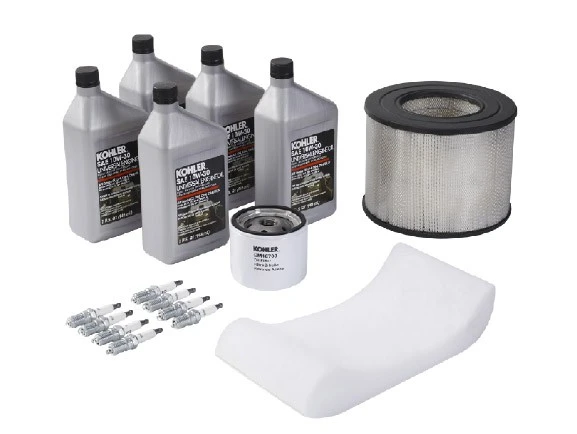
Over the life of your generator, a handful of consumable parts will need regular attention. Below are the six most common Kohler generator parts and what each one does.
Air Filters
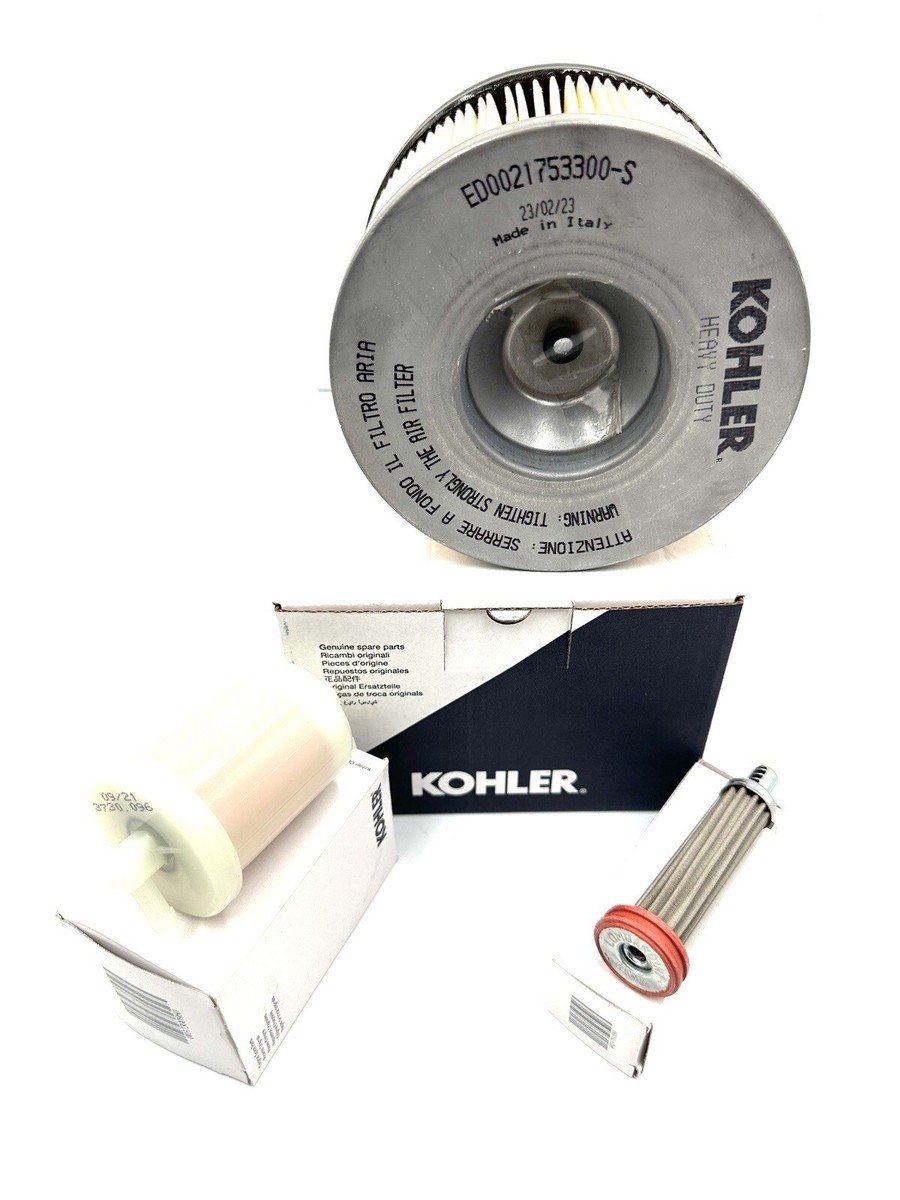
The air filter stops dust, pollen, and debris from entering the combustion chamber. Kohler standby generators typically use a heavy-duty paper or foam element. A clogged air filter restricts airflow, causing a rich fuel mixture, carbon buildup, and hard starting. Inspect the air filter every 100 hours or annually, and replace it sooner if you operate in dusty conditions.
Oil Filters
Oil filters trap metal particles, carbon, and sludge before they circulate through the engine. Kohler recommends changing the oil filter at every oil change, which is typically every 100 to 150 hours depending on the model. Running a generator with a saturated filter forces the bypass valve open, allowing unfiltered oil to reach critical bearings.
Spark Plugs
Spark plugs ignite the compressed fuel-air mixture inside the cylinder. Over time, the electrode gap widens and carbon deposits form on the insulator. Weak spark leads to misfires, rough idle, and incomplete combustion. Most Kohler generators use a single or dual spark plug configuration. Replace them every 100 to 150 hours or once per year.
Fuel Filters
Fuel filters protect the carburetor or fuel injector from rust, varnish, and debris. Ethanol-blended fuel degrades quickly and can clog a filter in a single season. A restricted fuel filter causes surging, stalling, and difficulty starting. Replace the fuel filter every 100 hours or annually, and always use fresh, stabilized fuel.
Batteries
The starting battery is one of the most overlooked Kohler generator parts. A weak battery cannot spin the starter motor fast enough for compression, especially in cold weather. Kohler recommends testing the battery every six months and replacing it every two to three years. Keep the terminals clean and tight, and use a trickle charger during long idle periods.
Control Boards
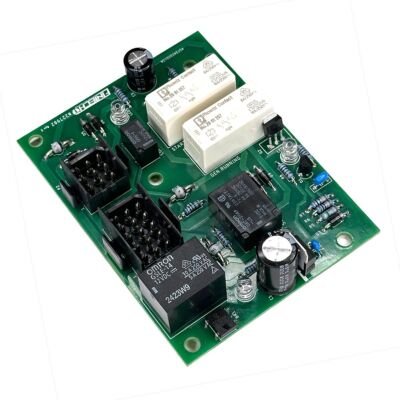
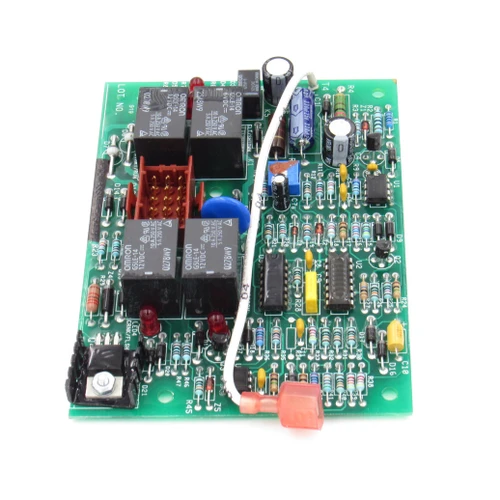
The control board is the brain of a modern standby generator. It monitors voltage, frequency, oil pressure, and temperature. It also handles automatic transfer switch signaling. While control boards are not consumable like filters, they are one of the most common failure points in aging units. Symptoms include false error codes, failure to start during an outage, and erratic voltage output. If diagnostics point to a bad board, replacement is often the only fix.
| Part | Function | Typical Interval | Warning Sign |
|---|---|---|---|
| Air Filter | Cleans intake air | 100 hrs / 1 year | Black smoke, hard start |
| Oil Filter | Filters engine oil | Every oil change | Low oil pressure, metal in oil |
| Spark Plug | Ignites fuel-air mix | 100–150 hrs / 1 year | Misfire, rough idle, no start |
| Fuel Filter | Cleans fuel supply | 100 hrs / 1 year | Surging, stalling, hard start |
| Battery | Powers starter and controls | 2–3 years | Slow crank, no crank, low voltage |
| Control Board | Monitors and controls operation | As needed | False alarms, no auto-start |
Kohler Generator Parts Replacement Schedule
Kohler publishes detailed service schedules for every generator series. While exact intervals vary by engine size and application, the following general timeline applies to most residential standby units. Adhering to this schedule ensures peak performance and keeps your warranty intact.
Every 100 Hours or Annually: Change engine oil and oil filter. Replace the air filter, spark plug, and fuel filter. Inspect belts, hoses, and battery terminals. Test the automatic transfer switch exercise cycle.
Every 200 Hours or Bi-Annually: Perform the 100-hour service plus valve clearance inspection, cooling system check, and combustion chamber decarbonization if needed. Inspect the exhaust system for leaks or corrosion.
Every 500 Hours or As Needed: Replace coolant (liquid-cooled models), inspect the alternator brushes, and test the control board firmware. This is also the time to replace worn belts and tensioners.
Every 2–3 Years: Replace the starting battery regardless of apparent condition. Battery capacity degrades over time, and a failed battery during an outage is the most common cause of a no-start event.
How to Identify the Right Kohler Generator Parts for Your Model
Kohler manufactures dozens of generator series, and parts are not always interchangeable. The safest way to find the correct Kohler generator parts is to use your model, specification, and serial number. This information is stamped on a metal data plate attached to the generator enclosure.
Once you have the model number, you can cross-reference it against the Kohler parts lookup tool or search by model on ugpus.com. Common residential series include the 14RESAL, 20RESAL, and 38RCL. Commercial lines such as the 30REOZJ and 60REOZJB use heavy-duty filters and multi-cylinder spark plug sets.
Pay close attention to revision numbers. A “GM62346” air filter may look identical to a “GM62346-S” but could have a different seal diameter or media density. When in doubt, match the part number exactly or contact a parts specialist.
OEM vs. Aftermarket Kohler Generator Parts
Owners often wonder whether they must buy OEM or if aftermarket Kohler generator parts are safe. The answer depends on the component and the supplier.
OEM parts are built to Kohler’s exact specifications. They carry the factory warranty and are guaranteed to fit. For critical components like control boards, oil filters, and piston rings, OEM is the safest choice.
Aftermarket parts from reputable manufacturers can offer significant savings on consumables like air filters, spark plugs, and batteries. However, quality varies widely. Look for aftermarket suppliers that publish specifications and offer compatibility guarantees. Avoid no-name brands that lack testing data.
At Universal Generator Parts, we stock both OEM and premium aftermarket Kohler generator parts. Every item in our catalog is tested for fit and performance, so you can choose the option that fits your budget without guessing.
Warning Signs That Kohler Generator Parts Need Replacing
Your generator will often tell you when a part is failing. Learn to read these signals and act before a minor issue becomes a major repair.
- Hard starting or no start: Usually points to a weak battery, fouled spark plug, or clogged fuel filter. Start by testing the battery voltage under load.
- Black or blue exhaust smoke: Black smoke indicates a rich mixture, often from a dirty air filter. Blue smoke means oil is burning, which may signal worn rings or a failed breather.
- Surging or hunting idle: A fuel delivery problem. Replace the fuel filter and check for water or varnish in the carburetor bowl.
- Low oil pressure alarm: Could be low oil level, a clogged oil filter, or a failing oil pressure sensor. Never ignore this alarm.
- False error codes or no exercise cycle: Often traced to a failing control board or loose wiring harness. Inspect connectors for corrosion.
If your generator exhibits any of these symptoms, perform a full inspection and replace the suspect Kohler generator parts before the next outage. Waiting until the grid fails is never the right time to troubleshoot.
Frequently Asked Questions
How do I know which Kohler generator parts fit my unit?
Locate the model, spec, and serial number on the generator data plate. Enter this information into the parts search on ugpus.com or the official Kohler parts catalog.
How often should I replace Kohler generator parts?
Replace air filters, oil filters, spark plugs, and fuel filters every 100 hours or annually. Replace the battery every 2 to 3 years. Control boards are replaced only when they fail.
Are aftermarket Kohler generator parts reliable?
Yes, if sourced from a reputable supplier. Premium aftermarket filters and spark plugs often meet or exceed OEM specs. For control boards and internal engine components, OEM is strongly recommended.
Can I replace Kohler generator parts myself?
Most consumable parts like filters, spark plugs, and batteries are user-serviceable. Control board replacement and internal engine work should be performed by a qualified technician to avoid warranty issues.
What is the most commonly replaced Kohler generator part?
The air filter and oil filter are replaced most frequently because they are part of every routine service. The battery is the most common failure point between scheduled maintenance visits.
Where can I buy genuine Kohler generator parts?
Universal Generator Parts stocks a full range of OEM and aftermarket Kohler generator parts. Browse by model number or contact our support team for compatibility verification.
Why is my Kohler generator showing a control board error?
Control board errors can result from voltage spikes, moisture intrusion, or component aging. Try resetting the board per the manual. If the error returns, the board likely needs replacement.
Stock the Right Kohler Generator Parts Before You Need Them
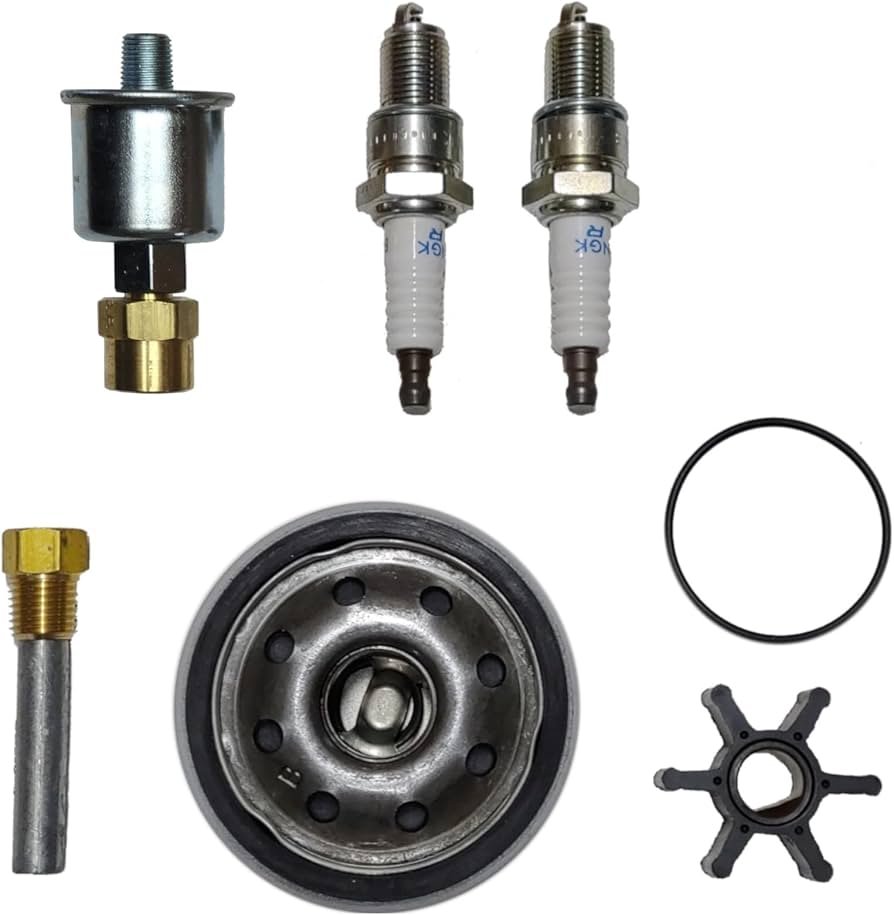
Kohler generator parts are not something you think about until the lights go out. By then, it is too late to order a filter or hunt down a battery. The smartest owners keep a small inventory of the most common consumables on hand: an air filter, an oil filter, a set of spark plugs, and a tested battery.
Follow the factory replacement schedule, use the correct part numbers, and do not ignore early warning signs. Whether you choose OEM or premium aftermarket Kohler generator parts, the key is consistency. A well-maintained Kohler generator can deliver decades of reliable backup power. A neglected one will fail you on the worst possible night.
Visit ugpus.com today to find the exact Kohler generator parts for your model. Enter your serial number, browse our maintenance kits, and keep your standby power ready for whatever comes next.
OEM and aftermarket air filters, oil filters, spark plugs, batteries, and control boards for every Kohler model.
Browse All Kohler Parts